




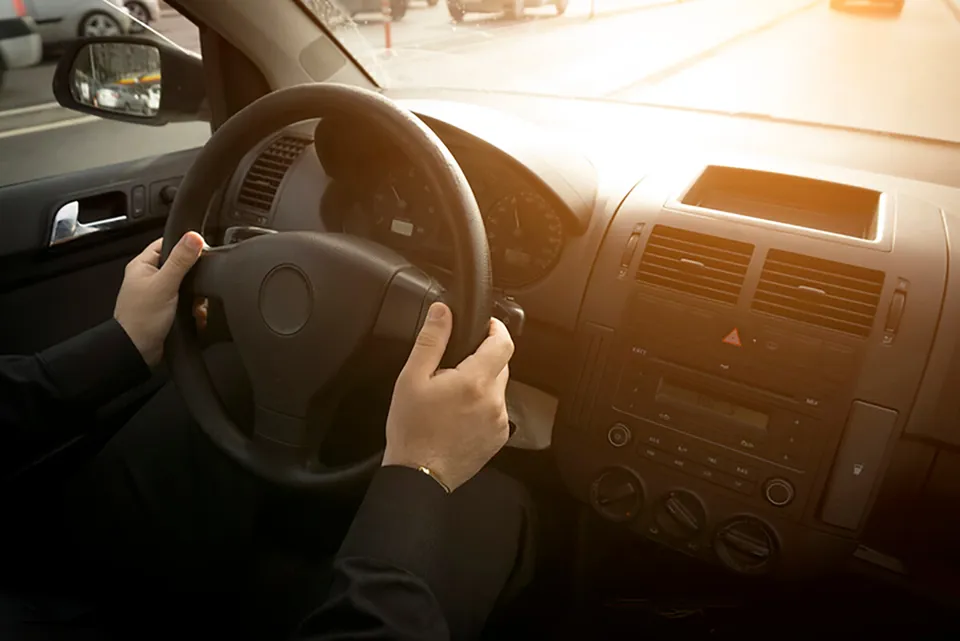
Ensuring that your fleet drive to the best of their abilities can be sometimes viewed as ambitious. Its quite often the case that fuel economies vary tremendously across fleets and it can be advantageous for fleets to consider driver training, although most drivers will insist that they are excellent drivers despite not having a refresher courses since they first got behind the wheel at 17 and we all know that we’ve become accustomed to bad habits.
By encouraging drivers to go on eco driving courses fleets will soon start to see the cost benefits involved and its not just leasing the correct car. If companies have for non-maintenance contracts then eco-driving can reduce stress on their vehicles thus reducing the amount of down time vehicles endure.
The important thing for drivers to consider is anticipation and planning – remove heavy objects from the boot – ensure the tyres are inflated correctly – not to fill up too much (no more than half a tank) – all of these can reduce fuel economy.
Eco-driving tips
- Drive off from cold, the engine will reach its operating temperature – and therefore efficiency – more quickly.
- Check your revs, change up before 2,500rpm (petrol) or 2,000rpm (diesel).
- Drive smoothly and anticipate road conditions. Avoid sharp acceleration and heavy braking.
- Ease off the accelerator when slowing down or driving downhill.
- Slow down – driving faster consumes more fuel.
- Switch off the engine if you’re going to be stationary for a significant amount of time.
- Plan ahead.
- Avoid short journeys.
- Ditch anything that adds weight or produces aerodynamic drag such as bike carriers, roof racks and boxes.
- Check tyre pressures – under-inflated tyres increase fuel consumption.
Fleet Leasing can learn a lot from ensuring that the above is carried out by their drivers and should begin to see improved fuel economies and lower costs. There’s even an app for drivers to download – DriveGain. This gives the driver feedback on Co2 emissions, cost per mile, recommends the correct driving gear and ‘smoothness’ readings at regular intervals.
Finance houses are also becoming conscious of the so-called ‘green effect’ and low emission and fuel efficient models are receiving enhanced residual values for fleets can achieve large savings by opting for these rather than performance cars.
The problem that fleets have to overcome is encouraging their drivers to go on such courses although the fleet managers can see the benefits it’s difficult to get people to change their behavior. However, chances are that the drivers will take the information learnt on the course and pass it on to friends and family members.
Perhaps its something we all ought to do?
Author - Alternative Route Finance











Julie - 18/08/2015 12:53
Good article