Review
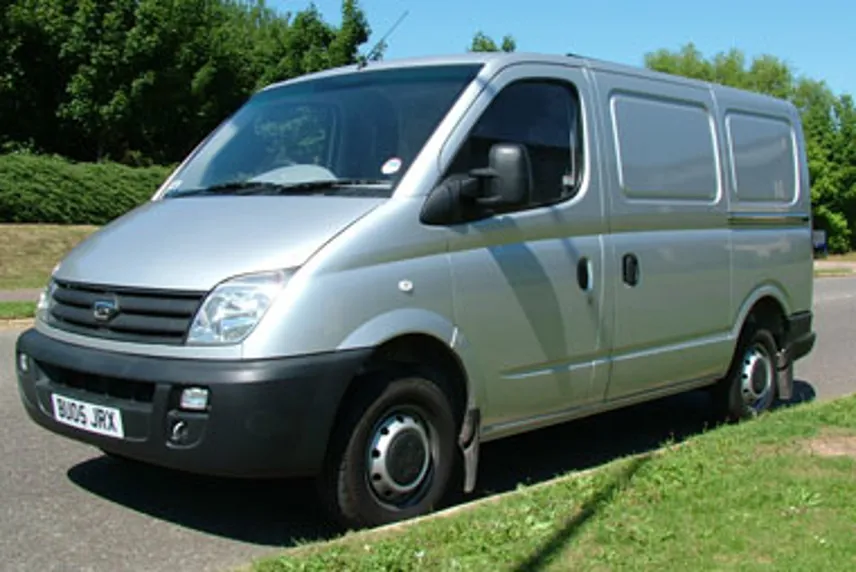
No-one is underestimating the problems British van manufacturer LDV faces in making a success of its new offering the Maxus.
The fact that the Maxus exists at all is a minor miracle – it finally broke cover after five years of back-breaking work and heart-breaking financial twists and turns – but now it is here and on sale, the van is having to battle for sales against a formidable array of rivals.
Who would dare to enter the arena and expect to win against the mighty Ford Transit, let alone the Mercedes-Benz Sprinter with its standard ABS brakes and ESP traction control?
And that’s not to mention other rock solid rivals such as the Vauxhall Movano, Renault Master and Volkswagen LT.
Such a pretender is going to have to be made of pretty sturdy stuff.
I first drove the LDV Maxus at the press launch in January and at that time the massed ranks of Britain’s LCV press were confined to driving pre-production models.
My report then (Fleet Van, March/April 2005) concluded that while the Maxus was a fine looking van and not a bad drive either, there were several rough edges in the fixings and fittings department that needed ironing out.
Now with the Maxus having been on sale for six months, I finally got my hands on a ready-to-rock model for a week’s appraisal.
The Maxus comes in two wheelbases, gross vehicle weights of between 2.8 tonnes and 3.5 tonnes and three roof heights.
Minibus and chassis cab versions are planned for next year but fleets wanting these models will still be able to buy them in the old Convoy format.
Load volumes range from seven cubic metres to 11.4 cubic metres and payloads from 917kg to 1,616kg.
The vans are powered by Italian VM 2.5-litre common rail turbodiesel engines as seen in vehicles such as the Jeep Cherokee and Chrysler Voyager.
There are two power outputs – 95bhp and 120bhp – and a 140bhp version will follow later in the year.
Standard equipment includes power steering, driver’s airbag, electric windows and mirrors, a CD player, driver and passenger seatbelt pre-tensioners, remote plip locking, engine immobiliser, height adjustable driver’s seat, tachometer and a pollen filter, while paid-for extras include ABS brakes, a passenger airbag, alarm, slamlocks in the rear, plywood flooring and trim, a fully adjustable driver’s seat with lumbar adjustment and full steel bulkhead.
Warranty is either three years/100,000 miles or four years/60,000 miles and servicing intervals are 20,000 miles. Prices range from £12,995 to £18,495 ex-VAT.
Our test van was the 2.8-tonne gvw long wheelbase high roof model with the 120bhp engine and weighed in at £15,295 ex-VAT.
So have those gremlins been ironed out now the van is officially on sale? Well, yes and no.
While the general build quality in our test van had improved over those launch models, it still came complete with a few minor niggles – the left-hand indicator, for example, didn’t cancel itself out and the fuel gauge seemed to have a mind of its own and at one time told me the van was three-quarters full, only to correct itself three seconds later and inform me that it was nearly empty.
Worse still, the optional air conditioning system refused to pump out any cold air into the cab.
But these problems apart, how did the Maxus shape up during our test week?
Let’s have a look...